

Years of Experience
Solid expertise in Odoo ERP development, system integration, and enterprise solutions.
Successful Projects
Successfully executed and deployed across diverse industries and sectors.
Regional Countries
A trusted presence in Egypt, KSA, UAE, Oman, Bahrain, and Algeria.
Active Users
Major enterprises relying daily on our robust technical infrastructure.
Is Your Company Facing These Hurdles in Daily Operations?
If your decisions rely on delayed reports or unverified figures, it’s time to switch to a system that gives you clarity and control.
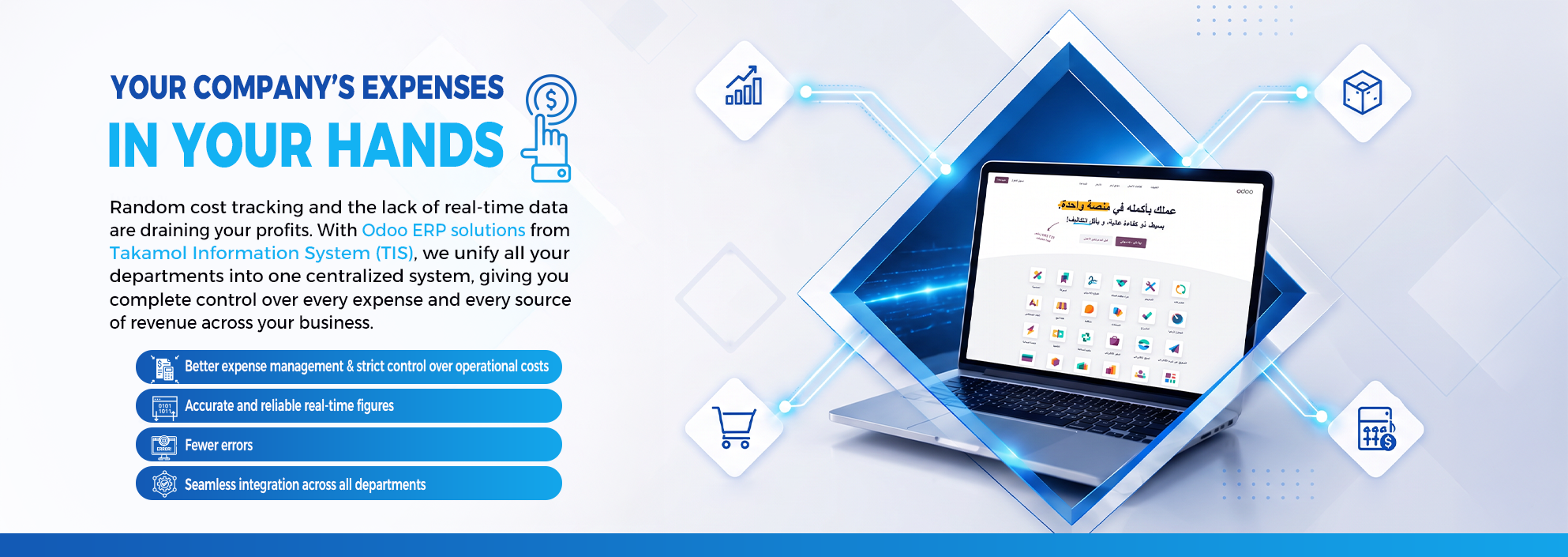
You struggle to track operational expenses and monitor waste, while failing to generate accurate financial statements and metrics that reflect your true company performance.
Relying on outdated software that can no longer accommodate business growth, lacking real-time dashboards required for fast executive decision-making.
Metrics are scattered across disparate systems and spreadsheets, forcing management to spend days gathering data instead of accessing a unified real-time dashboard.
Data is re-entered across multiple departments and systems—such as registering a customer order, then the invoice, then inventory movements—wasting time and multiplying error risks.
A Unified Digital Ecosystem Redefining Your Enterprise Resource Management!
Why Takamol Information System?
We deliver integrated business solutions… not just software applications
Business Understanding Before System Implementation
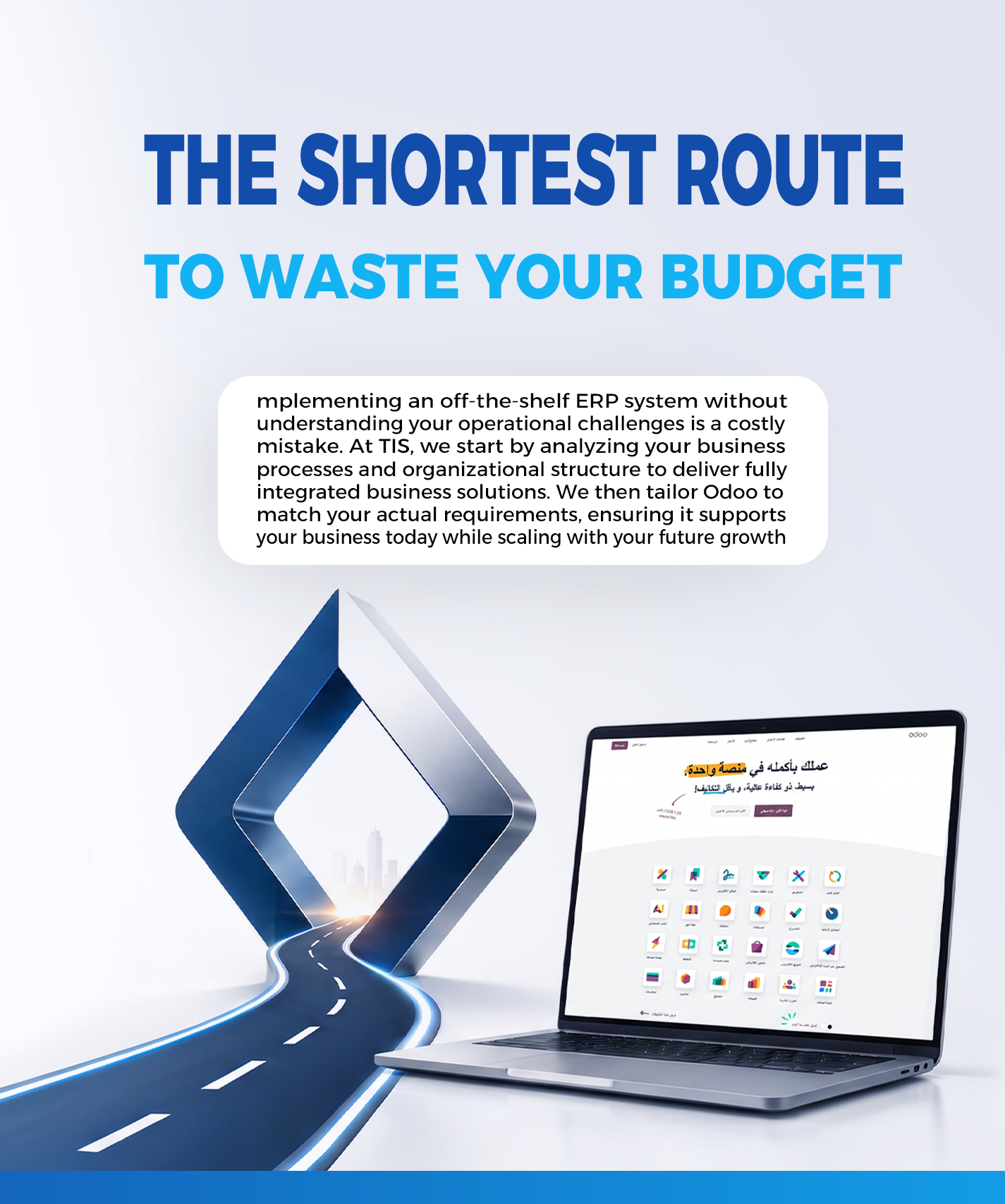
We don't start with direct installation; we thoroughly analyze your business nature, operational challenges, and workflows to deliver a solution that addresses root causes rather than symptoms.
Tailored System Customization
We configure and customize Odoo ERP to align perfectly with your financial, administrative, and operational procedures, instead of forcing your team into rigid, unfit templates.
Dedicated In-House Experts
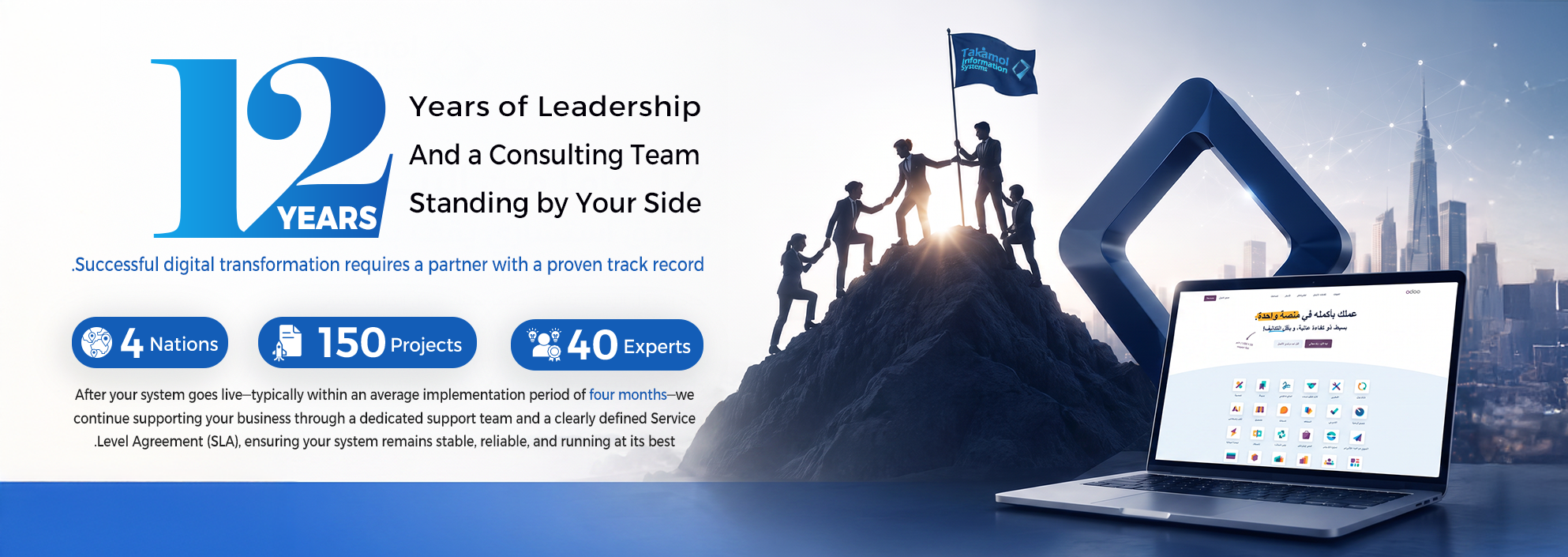
Our team comprises 40 experienced consultants with practical domain expertise across Egypt and the region, streamlining communication and accelerating request handling.
Value-Driven Investment
We offer tailored implementation plans for SMEs as well as large enterprises, considering operational scale, user concurrency, and custom requirements.
Reliable Post-Launch Support
Our commitment extends beyond go-live; we provide dedicated technical support and post-launch follow-ups backed by a clear Service Level Agreement (SLA).
Multi-Sector Expertise
We have successfully deployed solutions across manufacturing, distribution, retail, contracting, services, real estate, education, and government sectors.
How We Work
A clear roadmap guiding your business from current operational challenges to full Go-Live execution
Demo Request & Initial Contact
We reach out to understand your initial needs and primary challenges, then schedule an exploratory meeting with an ERP consultant.
Business & Workflow Analysis
We analyze your organizational structure, current procedures, and data flows to identify operational gaps and system requirements.
Proposal & Scope Definition
We define project scope, required Odoo modules, custom developments, delivery timeline, and financial investment clearly.
Configuration & Customization
We configure your Odoo ERP system, customizing modules, approval workflows, and business reports based on your exact needs.
System Testing & User Training
We test end-to-end business cycles, verify data integrity and inter-departmental integration, then train end-users thoroughly.
Official Go-Live
We launch the system live across your organization while closely monitoring operational performance and handling user feedback.
Post Go-Live Support
We provide continuous technical support and maintenance via our dedicated Helpdesk team under agreed SLA terms.
Practical Experience in Key Sectors
We provide customized Odoo ERP solutions tailored to the exact operational cycle of each sector.
Manufacturing & Production
- Planning production orders, operations, and tracking manufacturing stages.
- Managing raw materials and production supplies.
- Tracking material consumption and linking it to manufacturing orders.
- Monitoring direct and indirect production costs.
- Accurately calculating the actual product cost.
- Managing inventory for raw materials, work-in-progress, and finished goods.
- Monitoring production capacity and operational plans.
- Managing quality control and inspection processes across different stages.
- Tracking waste and scrap, and analyzing its causes.
- Providing operational and financial reports for cost and profitability centers.
Trade & Distribution
- Managing procurement operations and purchase requests.
- Managing vendors, prices, and contract terms.
- Tracking sales orders, deliveries, and collections.
- Managing inventory across multiple warehouses and branches.
- Real-time tracking of item movements and stock levels.
- Managing inter-warehouse transfer operations.
- Monitoring reorder levels and minimum stock thresholds.
- Managing price lists, discounts, and commercial offers.
- Automatically linking sales with inventory and accounting.
- Analyzing sales by product, customer, or region.
- Providing reports to improve planning and reduce dead stock.
Retail & POS
- Managing POS and branches from a centralized system.
- Linking sales operations directly to inventory.
- Updating item quantities immediately upon transaction execution.
- Managing various payment methods.
- Tracking shifts and cash register movements.
- Managing offers, discounts, and loyalty programs.
- Managing customer data and their purchase history.
- Tracking top-selling and least-selling items.
- Comparing the performance of branches and POS terminals.
- Analyzing sales by period or employee.
- Automatically linking POS with the accounting system.
Contracting & Construction
- Creating and tracking the budget for each project.
- Managing main contracts and subcontractor agreements.
- Tracking invoices and completion percentages.
- Managing procurement specific to each project.
- Tracking material, equipment, and site requests.
- Linking expenses to cost centers and projects.
- Monitoring labor, equipment, and material costs.
- Managing change orders and additional works.
- Comparing actual costs against the planned budget.
- Tracking project cash flows.
- Measuring the profitability of each project independently.
- Reports to detect cost overruns early.
Professional Services
- Managing clients, contracts, and agreements.
- Managing projects, tasks, and implementation phases.
- Allocating resources and staff to projects.
- Tracking working hours and effort spent.
- Managing invoicing and collections.
- Tracking recurring contracts and renewals.
- Managing customer requests and after-sales services.
- Measuring the cost of providing each service.
- Calculating the profitability of contracts and projects.
- Tracking team and resource performance.
- Providing financial reports to improve service efficiency.
Government & Semi-Government
- Automating internal procedures and operations.
- Managing financial, human resources, and procurement.
- Consolidating data across different departments.
- Designing and managing electronic approval workflows.
- Implementing authorization levels and governance.
- Managing budgets and expenditures.
- Tracking procurement, contracts, and vendors.
- Managing government assets and inventory.
- Reducing reliance on paper-based transactions.
- Providing clear records for all operations.
- Supporting integration between systems and platforms.
- Providing dashboards to support decision-makers.
Real Estate
- Managing real estate projects and units.
- Tracking unit status (availability, reservation, sale, handover).
- Managing clients and sales opportunities.
- Managing reservations and contracts.
- Preparing and tracking installment schedules.
- Managing collections and overdue payments.
- Tracking sales and broker commissions.
- Managing after-sales services and handovers.
- Tracking maintenance work and facility management.
- Linking commercial operations with accounting.
- Analyzing sales and project profitability.
Education & Training
- Managing student and trainee data.
- Managing programs, courses, and groups.
- Organizing schedules, lectures, and classrooms.
- Managing registration and admissions.
- Tracking fees, installments, and collections.
- Managing instructors and staff.
- Tracking attendance and absences.
- Managing contracts, vendors, and procurement.
- Tracking expenses and budgets.
- Managing communication with students and clients.
- Linking educational operations with finance.
- Accurate reports on operational performance.
Our Valued Clients


Answers to your top questions about Odoo ERP
Everything you need to know about implementation time, customization, training, and technical support
The average implementation takes about 4 months, which may increase or decrease depending on the number of departments, modules, customization, and data migration.
Yes. We start by studying the current document cycle and procedures, then we configure and customize the system to match the nature of your work, approval paths, permissions, and required reports.
Our goal is to build a system that supports your actual operations, while providing necessary recommendations to streamline procedures and increase efficiency.
Odoo ERP can be integrated with various external systems, platforms, and services, depending on the nature of the current system and available integration capabilities.
Integration requirements are evaluated during the analysis phase, followed by determining the integration mechanism, scope of work, cost, and expected duration.
Yes. The project includes training users on the modules related to their tasks, explaining daily procedures, approval paths, and the mechanism for extracting reports.
Users and processes are also tested before the actual go-live to ensure team readiness.
Yes. We provide an average of two months of support and follow-up after the launch, through a specialized helpdesk team and a service level agreement (SLA) that defines communication mechanisms, response times, and issue resolution.
We don't treat the project as just a software installation process. Instead, we start with business and process analysis, then provide an integrated solution that includes consulting, configuration, customization, training, operation, and support.
Our team also possesses local and regional experience and a practical understanding of various sectors' needs.
We provide our solutions to small and medium-sized enterprises (SMEs), typically ranging from 10 to 200 employees, as well as large companies and organizations with over 200 employees.
The project scope is designed according to the volume of operations, number of users, departments, and required customizations.
Yes. The system allows managing multiple branches, warehouses, and companies within a centralized environment, with the ability to define independent permissions and generate consolidated or separate reports for each branch or entity.
Have another question you couldn't find an answer to here?
Our consulting team is ready to answer all your technical and operational inquiries
Don't Leave Your Company's Future to Guesswork and Fragmented Data
Start with a free consultation and live demo session. Let us show you how Odoo ERP can support your business goals and empower your management with full operational control.
Request a free custom demo for your company... Speak with one of our consultants now.